
What Is a Brand Activation? A Complete Guide to Planning One
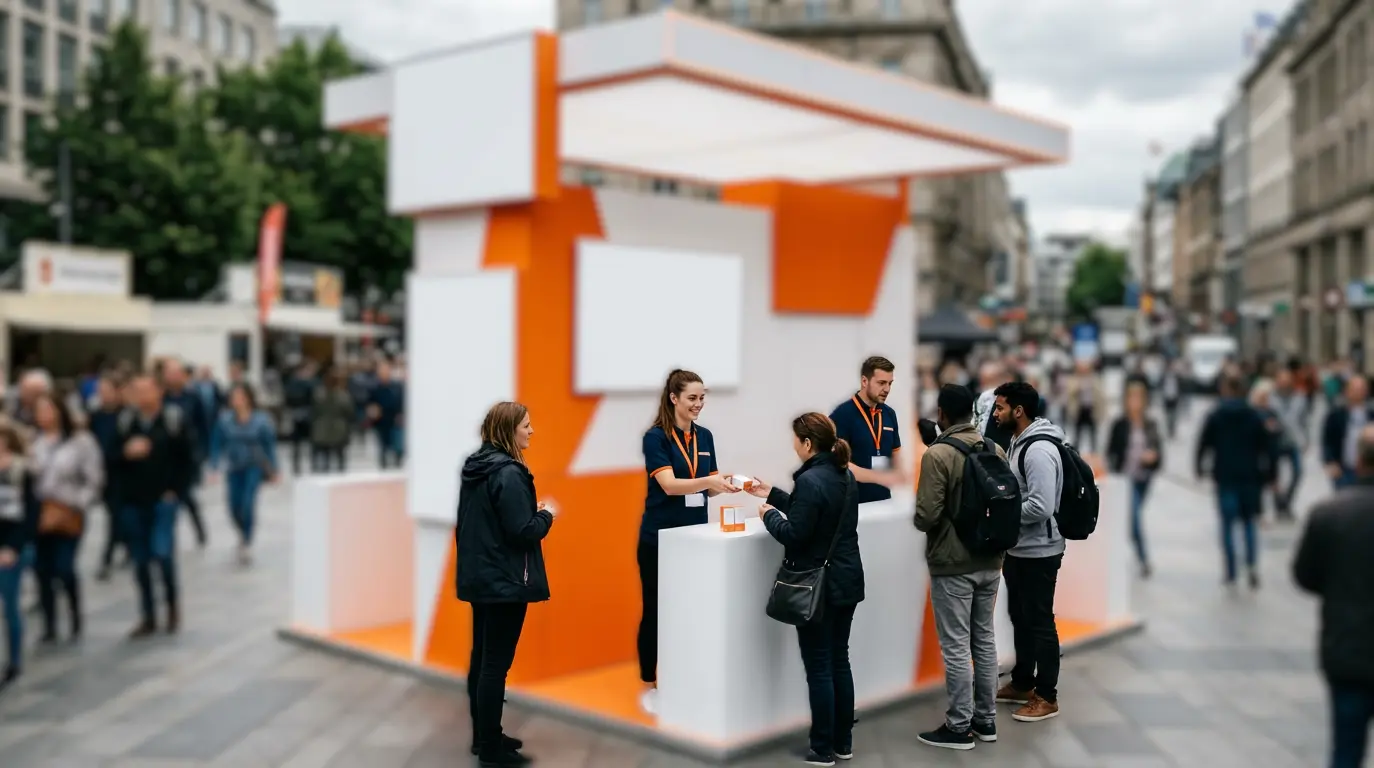
Brand activation is a live, interactive campaign. It turns passive awareness of a brand into active participation. Rather than telling an audience what a brand stands for, a brand activation lets them experience it directly, through a pop-up, a product sample, an immersive installation, or a shareable moment. The appeal isn’t just creative, either. In Event Marketer’s 2026 EventTrack study, 61% of consumers said they’re more inclined to purchase after attending a live event. This guide breaks down what a brand activation is, how it differs from experiential marketing, the formats it can take, and how to plan one that actually performs, not just one that looks good in a deck.
What Is a Brand Activation?
A brand activation is a targeted campaign or event designed to bring a brand to life through direct, interactive engagement with its audience. Instead of simply telling consumers about a product, it invites them to touch it, sample it, play with it, or become part of its story. The goal is measurable engagement. Foot traffic, social sharing, trial, or a direct lead, not just impressions.
Unlike a single advertisement, a well-run activation is built around a specific objective. Awareness, product trial, data capture, or sales. Every element of the experience, from the physical build to the staffing plan, has to serve that goal, or it doesn’t belong in the plan.
Brand Activation vs Experiential Marketing: What’s the Difference?
Brand activation and experiential marketing get used interchangeably, but they aren’t quite the same thing. Experiential marketing is the broader discipline. It’s the overall strategic approach of building a brand through experience rather than interruption. A brand activation is a specific tactic within that discipline. It’s a single campaign or event engineered to “activate” engagement at a particular moment, such as a product launch, a sponsorship, or a seasonal push.
A brand’s ongoing investment in immersive brand experience design is experiential strategy. The pop-up it runs for three weekends in June is the activation.
| Experiential Marketing | Brand Activation |
| Broad, ongoing strategic discipline | Specific, time-bound campaign or event |
| Builds brand affinity over time | Drives a defined, measurable action |
| Includes digital, physical, and hybrid touchpoints | Centers on a single physical or hybrid moment |
| A brand’s overall approach to immersive marketing | A single pop-up, sampling tour, or product launch event |
Why Brand Activations Matter
The case for brand activation is increasingly a data case, not just a creative one. In Event Marketer’s 2026 EventTrack study, 85% of B2B attendees said they came away feeling more educated about the product after attending. For brands weighing where to put next year’s budget, that’s a hard number to ignore.
For brands competing against an endless scroll of ignorable digital ads, a brand activation offers something scarce. A moment the audience actually chooses to participate in.
Types of Brand Activations
Brand activations take many forms, and most guides will list them out and leave you to guess which one fits your situation. Skip the guessing. The format should follow the objective, not the other way around.
Match the objective to the format
| Objective | Best-fit activation |
| Generate awareness | Guerrilla or immersive |
| Drive product trial | Sampling |
| Generate leads | Trade show or interactive |
| Create social content | Immersive or shareable |
| Launch a product | Pop-up |
| Reach multiple markets | Modular or scalable activation |
Use that table as a starting filter, then confirm the fit against the format breakdown below.
Pop-Up Activations
A pop-up activation is a temporary space, like a shop, lounge, or installation, that gives an audience a place to experience a brand for a limited time. It works well for product launches and seasonal campaigns because it creates urgency. The audience can’t visit next month.
Product Sampling
Product sampling puts the product directly in a consumer’s hands. This can happen at retail, in a high-traffic public space, or at a targeted event. It remains one of the most direct paths from awareness to trial, especially for food, beverage, and CPG brands.
Guerrilla Marketing Activations
Guerrilla-style activations trade budget for creativity and good timing. Street art. Surprise stunts. Placements in spots nobody expects a brand to show up. The goal is simple. Grab attention and get people sharing it, without the price tag of a major production. They only work when the idea itself is genuinely clever. A mediocre guerrilla stunt just looks like clutter.
Immersive & Interactive Installations
These are large-scale builds, like projection rooms, interactive walls, and sensory environments, designed to fully surround a participant in the brand’s world. They carry the highest production complexity of any format and the highest brand recall.
Trade Show & Retail Activations
These activations are built for a defined commercial environment, a trade show booth, an in-store display, or a retail takeover. The audience is already there for a reason, so the activation’s job is to earn attention against every other exhibitor or shelf competing for it.
Sponsorship & Festival Activations
This is a branded presence within a larger event, like a music festival, sporting event, or conference, designed to create a memorable footprint among an audience that’s already gathered and ready to engage.
Digital-Physical (Hybrid) Activations
These activations extend a physical experience into the digital space through AR overlays, QR-triggered content, or livestreaming, so their reach goes well beyond the people in the room.
Brand Ambassador Programs
Brand ambassador programs use trained representatives who carry a brand’s message into public or retail spaces over time. It’s a more sustained version of activation than a single event, though less concentrated. On its own, it rarely creates a big moment. Pair it with a pop-up or sampling push if you need one.
How to Plan a Brand Activation: Step-by-Step
A brand activation that performs is planned, not improvised. Here’s the process that holds up across formats:
Define Objectives and KPIs
Before any creative work begins, define what success looks like. Is it awareness, lead capture, product trial, or direct sales? Each objective points to a different brand activation strategy and a different measurement plan.
Know Your Target Audience
Where they gather, what draws their attention, and what would make them stop and participate. These answers shape the venue, format, and creative concept far more than the product itself does.
Design the Concept
This is where the creative idea takes shape: the physical environment, the interaction, and the story the audience walks away with. Strong concepts center on one clear, shareable moment.
Build, Fabricate, and Source
The concept becomes physical. Structures, displays, signage, and props get designed, sourced, and built. This is also the step where things most often go wrong, not because the concept was bad, but because whoever builds it wasn’t part of the room where it was designed. More on that in Common Challenges below.
Execute On-Site
Staffing, logistics, permits, and contingency planning all come together on activation day. Even the best-designed concept depends on flawless execution to land.
Measure and Report
Post-event data gets collected and compared against the objectives set in step one, closing the loop and informing the next activation. Think foot traffic, engagement, leads, sales lift.
Brand Activation Examples That Get It Right
Some of the most effective brand activations of the past two years show what’s possible across very different budgets and formats. A few are worth knowing before you plan your own.
Coca-Cola’s “Share a Coke.” Personalized bottles turned ordinary packaging into a shareable, personal object, giving consumers a reason to seek out their own name and post about it, rather than just buy the drink.
LEGO’s driveable Formula 1 cars. At the 2025 Miami Grand Prix drivers’ parade, LEGO built ten fully driveable F1 cars almost entirely from bricks, a literal demonstration of the product’s core promise.
Absolut’s “House of Cosmo” at Coachella. As the festival’s official vodka partner, Absolut built an air-conditioned lounge themed around its campaign, pairing a celebrity ambassador with a space designed for shareable moments.
Pop49 in Action
Global examples are useful for inspiration, but they don’t tell you much about who’s going to build your activation. Pop49 has worked on activations for national brands including Pepsi, IKEA, and Sol Cerveza, handling design and fabrication in-house rather than passing the concept between multiple vendors. Two projects show what that looks like in practice.
Pepsi: Reinventing the Taste Test
Objective: Bring Pepsi’s brand identity to life across a run of different live events, not one single moment.
Audience: Event attendees at high-traffic public activations, from taste-test stations to Toronto Pride.
Format: A mix of product sampling, seasonal guerrilla-style installations, and festival sponsorship, all under one ongoing partnership.
What Pop49 built: A reinvented Pepsi vs. Coke taste-test display, a seasonal “leprechaun hut” installation with an integrated vending machine, a super-sized four-player branded hockey table, and a stage and photo-op setup for Toronto Pride.
The production challenge: A taste test only works if the line keeps moving. Pop49 built the display so brand ambassadors could reset each station quickly between guests, keeping the experience smooth even during high-traffic events.
The result: A set of builds that let Pepsi run sampling, seasonal, and sponsorship activations from one partner, instead of briefing a different vendor for each format.
See the full Pepsi case study →
Sol Cerveza: A Reusable Mardi Gras Activation
Objective: Give Sol Cerveza a high-energy, fully branded event presence that captured the spirit of Mardi Gras.
Audience: Guests at Sol Cerveza’s live brand events, the kind of crowd a beer brand needs gathering around a bar, not scrolling past an ad.
Format: An immersive event activation built around a custom bar and interactive games.
What Pop49 built: A branded bar and photo-ready back wall, plus three custom games. Skull-shaped cornhole boards in Sol Cerveza colors, a life-sized Connect 4 set, and oversized Jenga pieces with reversible bases that double as storage.
The production challenge: Everything had to survive repeated use across different events, not just look good once. Pop49 built each piece for durability and easy transport, so the kit could travel from event to event instead of getting rebuilt each time.
The result: A reusable activation kit that gave Sol Cerveza a consistent, on-brand presence at every stop, instead of a one-off build with a one-event shelf life.
See the full Sol Cerveza case study →
How Much Does a Brand Activation Cost?
Costs vary by scale, format, and duration, but vague ranges don’t help you plan a real budget. Here’s a more useful breakdown by activation type.
Small or local activation
A single-day sampling event, a street team, or a simple pop-up booth. Roughly $3,000 to $15,000, covering staffing, product, and basic signage.
Custom pop-up
A branded space built for one market, running days to weeks. Roughly $25,000 to $75,000, covering custom fabrication, a compact footprint, and short-term staffing.
Trade show or retail activation
A custom booth or in-store takeover. Roughly $15,000 to $60,000, depending on booth size and how much custom fabrication is involved.
Multi-city or touring activation
The same build, executed across several markets. Roughly $100,000 to $500,000, covering fabrication built to survive transit, plus logistics and staffing across every stop.
Large-scale immersive installation or festival sponsorship
Fully custom structures and sensory environments with the highest production complexity. $250,000 and up, with major festival sponsorships often reaching seven figures.
These are planning ranges, not quotes. Actual pricing depends on a handful of factors, and understanding them upfront gets you a more accurate number faster.
What actually drives the price
Fabrication and materials. Venue and permits. Staffing. Transportation and logistics, especially for anything touring. Technology, like AR overlays or interactive tech. Number of locations. And installation complexity, since a structure that needs a crew and a week to build costs more than one that ships flat and assembles in an hour.
The biggest lever isn’t the venue. It’s how much gets custom-built and how many markets it has to travel to.
Measuring Brand Activation ROI
A brand activation is measurable when it’s planned with the right KPIs from the start. Common metrics include foot traffic and dwell time, social and earned media impressions, sampling-to-conversion rate, lead capture volume, and direct sales lift. The number that matters most is whichever KPI ties back to the objective set in the planning phase, not whichever one looks best in the report.
Common Challenges in Executing a Brand Activation
Even a strong creative concept can underperform if execution breaks down. Three failure points show up again and again.
Budget uncertainty
Fabrication and logistics costs are hard to estimate without experience, so budgets get set before anyone really knows what the build requires.
Vendor coordination
A design firm, a fabricator, and a staffing agency working from three separate briefs rarely produce a seamless result. Someone has to translate between them, and that’s where things slip.
Measurement difficulty
Many teams still aren’t confident they’re tracking the right ROI, so the same activation gets called a win or a loss depending on who’s reading the report.
The pattern behind most of these failures isn’t a bad idea. It’s the handoff. Once a rendering leaves the original creative team and goes to a vendor who wasn’t part of that conversation, small details get lost, delayed, or reinterpreted. Every extra vendor in that chain is one more place for the concept to drift from what gets delivered on-site.
That’s the whole argument for keeping design and fabrication under one roof. Pop49 isn’t just an experiential marketing agency executing a brief. It’s the team that draws the concept and builds it, so there’s no handoff for the details to get lost in.
Brand Activation Trends to Watch in 2026
AI-driven personalization. Activations increasingly tailor the on-site experience, offers, content, even physical takeaways, to each attendee in real time.
Sustainable, reusable builds. More structures are designed for multiple activations rather than single-use, as budget and environmental pressures both push toward reusable fabrication.
Hybrid “phygital” formats. Physical activations now extend to AR, QR-triggered content, and livestreaming, reaching audiences well beyond those in the room.
First-party data capture. According to EventTrack, 98% of attendees create shareable content at events. Smart brands are capturing that engagement as owned, first-party data instead of letting it disappear into someone else’s platform.
Frequently Asked Questions
What is an example of a brand activation?
A product sampling tour, a branded pop-up shop, or an interactive festival installation are all examples. Each is a defined, time-bound campaign built around a specific objective, not an ongoing marketing effort.
Is brand activation the same as advertising?
No. Traditional advertising tells an audience about a brand. A brand activation lets the audience experience it directly. Advertising goes one way and stays passive. A brand activation is built around participation, interaction, and a measurable action the audience takes.
Who executes a brand activation: an in-house team or an agency?
Both approaches are common. Larger brands with dedicated experiential teams sometimes execute smaller activations in-house. Most brands partner with an experiential marketing agency, ideally one that handles fabrication in-house, for the logistics and staffing expertise large-scale brand activations require, especially when the campaign spans multiple markets.
How long does it take to plan a brand activation?
Simple, single-location activations can be planned in as little as four to six weeks. Larger, multi-city, or fully custom-fabricated activations require 3 to 6 months. That gives time for concept development, custom fabrication, and logistics planning.
What makes a brand activation successful?
A successful brand activation starts with a clear objective and a concept built around one memorable moment, backed by flawless on-site execution and a measurement plan set up before the event, not after.
Do brand activations work for B2B brands?
Yes. B2B marketers report allocating substantial budget to experiential marketing. Trade shows, conferences, and sponsorship activations are the biggest focus areas. In-person engagement remains one of the highest-converting channels for building relationships with business buyers.
Choosing the Right Brand Activation Partner
Once a brand decides to move forward with an activation, the biggest decision left is who executes it. A few questions are worth asking any potential partner:
Do they design and build in-house, or manage a chain of subcontractors?
Can they scale from a single regional pop-up to a national rollout without a minimum order threshold?
Is there one point of contact from concept through delivery, or does the handoff between teams start eating into your concept along the way?
A brand activation works because it replaces a passive impression with a moment when someone chooses to participate. The data on purchase intent, brand sentiment, and earned content backs that up. The formats and budgets vary widely, but the throughline for every successful activation is the same. A clear objective, a concept worth sharing, and execution that matches the design.
Your next brand activation deserves a single partner from concept to completion.


More Articles
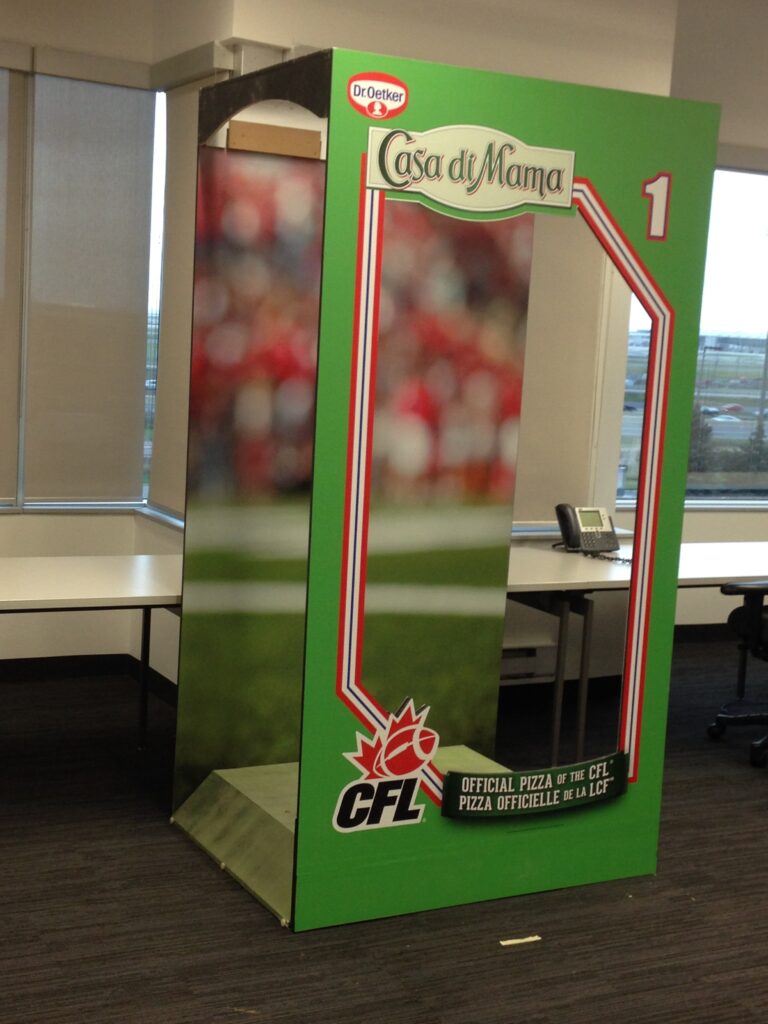
Types of Retail Displays Explained: A Guide for Brands and Retailers
POP49 designs and manufactures custom retail display systems in-house, covering POP displays, countertop units, retail shelving, and branded kiosks for…

What is Experiential Marketing?
How POP49 Can Work With You Experiential marketing is a powerful marketing strategy that allows brands to create memorable experiences…
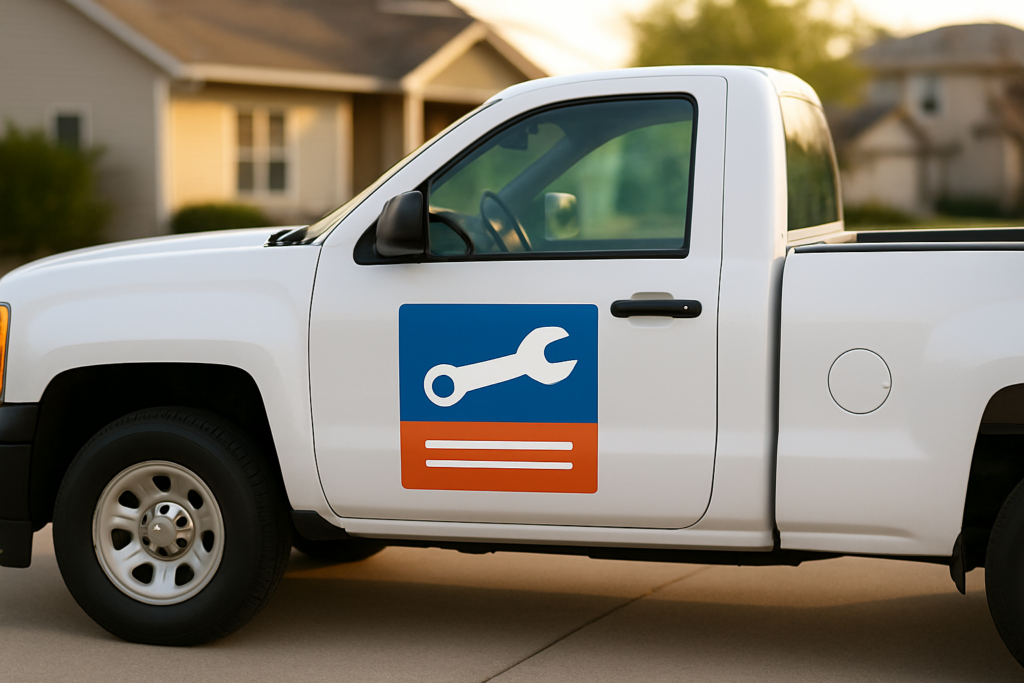
How Much Do Magnetic Signs Cost? 2026 Pricing Guide for Vehicle & Business Signage
Magnetic signs cost $15-$175 based on size and quality. Get real pricing for vehicle magnets and fleet orders, plus what…